'/%3e%3cpath%20id='Vector_2'%20fill-rule='evenodd'%20clip-rule='evenodd'%20d='M41.7365%206.2391C40.7304%206.2391%2039.915%207.05458%2039.915%208.06058C39.915%209.06663%2040.7304%209.88206%2041.7365%209.88206C42.7423%209.88206%2043.558%209.06663%2043.558%208.06058C43.558%207.05458%2042.7423%206.2391%2041.7365%206.2391Z'%20fill='var(--fill-0,%20white)'/%3e%3cpath%20id='Vector_3'%20fill-rule='evenodd'%20clip-rule='evenodd'%20d='M11.2236%206.56889C11.2236%206.74741%2011.076%206.89236%2010.8943%206.89236H2.52113V2.50723H10.8943C11.076%202.50723%2011.2236%202.65189%2011.2236%202.8307V6.56889ZM9.43021%200.0836868H0V13.999H2.52113V9.31585H9.42997C11.7867%209.31585%2013.6975%207.43888%2013.6985%205.12302L13.699%204.27991C13.7%201.96262%2011.7886%200.0836868%209.43021%200.0836868Z'%20fill='var(--fill-0,%20white)'/%3e%3cpath%20id='Vector_4'%20fill-rule='evenodd'%20clip-rule='evenodd'%20d='M63.789%2011.3469C63.789%2011.5257%2063.644%2011.6704%2063.4652%2011.6704H55.7529C55.5744%2011.6704%2055.4294%2011.5257%2055.4294%2011.3469V0.0836868H53.0144V9.80446C53.0144%2012.1211%2054.8923%2013.999%2057.2088%2013.999H62.0102C64.3268%2013.999%2066.2048%2012.1211%2066.2048%209.80446V0.0836868H63.789V11.3469Z'%20fill='var(--fill-0,%20white)'/%3e%3cpath%20id='Vector_5'%20fill-rule='evenodd'%20clip-rule='evenodd'%20d='M19.8448%2011.2329V0.0655822H17.324V10.3478C17.324%2012.3539%2018.9897%2013.9799%2021.0438%2013.9799H29.5237L30.3019%2011.5564H20.176C19.9931%2011.5564%2019.8448%2011.4117%2019.8448%2011.2329Z'%20fill='var(--fill-0,%20white)'/%3e%3cpath%20id='Vector_6'%20fill-rule='evenodd'%20clip-rule='evenodd'%20d='M81.0406%2011.253C81.0406%2011.4316%2080.8957%2011.5765%2080.7171%2011.5765L72.727%2011.5748V2.50822H80.7171C80.8957%202.50822%2081.0406%202.65288%2081.0406%202.83169V11.253ZM79.279%200.0846748H70.2495V14H79.2776C81.5936%2014%2083.4716%2012.1227%2083.4721%209.80665L83.4735%204.28044C83.4742%201.96337%2081.5961%200.0846748%2079.279%200.0846748Z'%20fill='var(--fill-0,%20white)'/%3e%3c/g%3e%3c/svg%3e)
Capturing the consult for end-to-end patient journey intelligence
Interview with
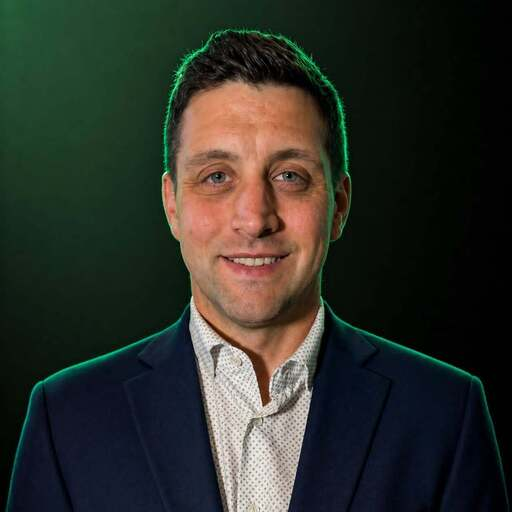
Mick Lewis
Co-Founder & Technical Director of EyeAdvisor
About EyeAdvisor
EyeAdvisor brings AI-powered consultation intelligence to ophthalmology, pairing live coaching cues with backend data to help counselors and surgeons guide patients better and improve their premium conversion rates. That is, the percentage of cataract patients who choose an out-of-pocket premium lens to reduce their dependence on glasses or contacts.
They knew what practices needed, but capturing those patient conversations is foundational to everything EyeAdvisor does. Using Plaud Embedded, they built the integration that makes it possible.
The Problem
EyeAdvisor's platform coaches counselors through patient conversations in real time and helps practice directors identify where revenue is being lost. But coaching requires data, and getting audio from every touchpoint in an ophthalmology practice turned out to be harder than it looked.
The problem wasn't in the counseling center, where staff have tablets and time. It was everywhere else. Surgeons discussing lens options with patients don't have a computer in the room. Exam rooms and pre-operative consultations are places where staff are moving and operating on tight schedules.
Asking them to set up a recording, even one that takes fifteen seconds, was enough friction to kill adoption.
Tablets & phones
The practices that tried to work around it ran into their own problems. One account used an iPad, but Apple's background recording restrictions meant the recording would stop whenever the app moved out of focus, which happened constantly in a clinical workflow. Without a reliable solution, entire categories of patient conversation were simply going uncaptured.
“Getting them to do this extra data entry step is incredibly difficult,” Nick said. The staff would nod, agree it sounded useful, and then find a reason not to do it.
The Search
EyeAdvisor had identified hardware as the answer before they launched. In fact, they actually held a digital recorder on stage at their October 2025 launch and promised a wearable device was coming.
Sourcing their own hardware
Lewis knew the hardware sourcing route firsthand. His background was in importing products from China, and he explored building a proprietary device. “This was absolutely miserable,” he said. The cost at even moderate quantities was prohibitive.
Security and compliance for a healthcare-adjacent product added another layer of complexity. And the ongoing maintenance burden, managing firmware, hardware failures, vendor relationships, wasn't something a lean startup wanted to own.
“We just didn't want to have to maintain that whole ecosystem. We wanted somebody who had best-in-class hardware, who can take all of those issues off the table.”
They put custom hardware on the back burner and kept watching what Plaud was building.
Why Plaud
EyeAdvisor had identified Plaud as the right fit before the SDK even existed.
The form factor was exactly what the clinical environment required: a small, wearable device a surgeon could put on their wrist and activate with one button. No app switching, no background recording failures, no tablet propped on a desk pointing at a patient. “Just push a button and get information into EyeAdvisor,” Lewis said. “That was going to be a really, really great match.”
“You guys just have really nice looking pieces of hardware that work really well and simply capture.” The hardware quality and reliability sealed it.
In a medical context, where the device would be on a clinician in front of a patient, aesthetics and reliability weren't nice-to-haves.
The Outcome
EyeAdvisor built their integration on the Plaud SDK and had a working app ready for pilot deployment in weeks, with a few practices already using it.
The device captures the conversation, Plaud's transcription pipeline turns it into speaker-labeled text, and EyeAdvisor's platform delivers live coaching cues during the consultation and performance data for post-visit review.
“We have doctor owners of these giant practices who want to equip all of our teams to have touch points on every single piece of the patient journey.”
The hardware advantage
Friction around recording from applications was one of the most common objections EyeAdvisor faced from new accounts. Clinical staff were already juggling three different systems and weren't interested in learning a fourth.
The NotePin S removes that objection, given the simplicity — just click a button to record. “It reduces all the friction and barrier for EyeAdvisor on new customer onboardings.”
What's Next
Near term, the roadmap is about completing coverage. That means capturing every stage of the patient journey: front desk, testing, surgeon consultation, and counseling, integrating all of it into a single view inside EyeAdvisor.
Longer term, Lewis and Nick see the platform expanding beyond ophthalmology. Dental is the next target, where AI coaching has historically struggled because of the movement, occlusion, and noise in a dental procedure environment. A wearable that captures audio directly, regardless of what's happening in the room, changes that calculus.
The vision is an AI coaching platform that follows the patient and the clinician, wherever the conversation actually happens, not just wherever a computer happens to be.
EyeAdvisor is building on Plaud Embedded, the transcription API and mobile SDK for developers who need real-world audio capture that works.